
Afri Air Publishes Farmer Guides on Sacaa Drone Rules and Agras Spraying Drones
Ermelo-based DJI distributor Afri Air helps South African farmers understand SACAA drone rules for farm flights and compare Agras spraying drones with tractors and manned aircraft.
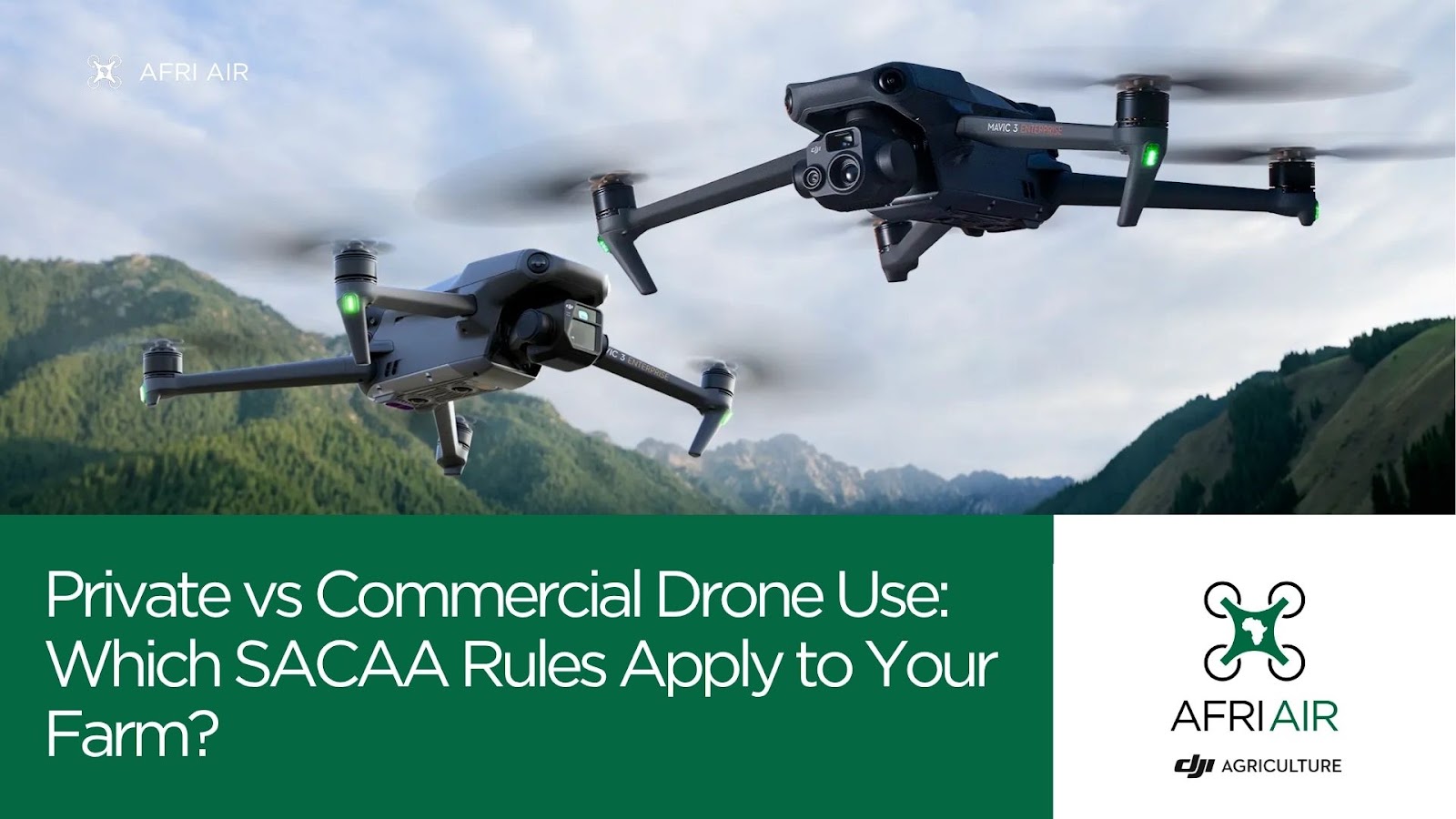
ERMELO, South Africa — Afri Air, an authorised DJI distributor, has published two practical guides for farmers considering agricultural drones. The first explains how the South African Civil Aviation Authority's Part 101 rules apply to farm flights, while the second compares the DJI Agras T55, T70P and T100 with tractor rigs and manned aircraft. Together, they help growers make confident decisions on both compliance and equipment before they invest.
For many farmers, choosing a drone is the simple part. The more important questions sit around it. Does checking crop health count as private or commercial flying? Which approvals come first, and how should paperwork keep pace with a new purchase? Once the regulatory picture is clear, which spraying method makes the most of every hectare, from waterlogged lands after summer rain to contour banks, hillside orchards and small, irregular blocks that are hard to reach with a boom?
The first article, Private vs Commercial Drone Use: Which SACAA Rules Apply to Your Farm?, explores the factor that decides a flight's category, where crop monitoring and spraying fit, the boundaries that apply to every private flight and the commercial pathway step by step. It also matches drones such as the DJI Mavic 3 Multispectral and DJI Agras T70P to each category.
The second article, Agras T55, T70P and T100: How Unmanned Drone Spraying Compares to Manned Methods, weighs drones against traditional methods on five factors that matter on South African farms: soil impact, terrain access, input accuracy, operator requirements and running cost. It closes with guidance on choosing between the three Agras models based on block size, terrain and crop type.
One insight stands out. A two-year maize trial on sandy loam recorded yield penalties of between 7.6% and 15.5% from repeated vehicle passes, even when compaction was limited to the topsoil. The spraying guide explains how drone application changes that picture, and why soil protection is only the starting point of the comparison.
For the full breakdown, read Private vs Commercial Drone Use: Which SACAA Rules Apply to Your Farm? and Agras T55, T70P and T100: How Unmanned Drone Spraying Compares to Manned Methods. Farmers ready to explore the range can also browse Afri Air's unmanned agricultural spraying drones.
About Afri Air
Afri Air (AA Drones) is an authorised DJI distributor based in Ermelo, supplying enterprise drones to agriculture, security, mining, construction and surveying operations across South Africa. The team helps buyers choose the right DJI drone configuration for their needs, and every agricultural drone purchase includes Afri Air's pilot training course.
Contact
Afri Air
2 De Clercq St, Ermelo, 2350
072 434 5776
Contact the Author
Want to reach out to the author?
Login to contact author